
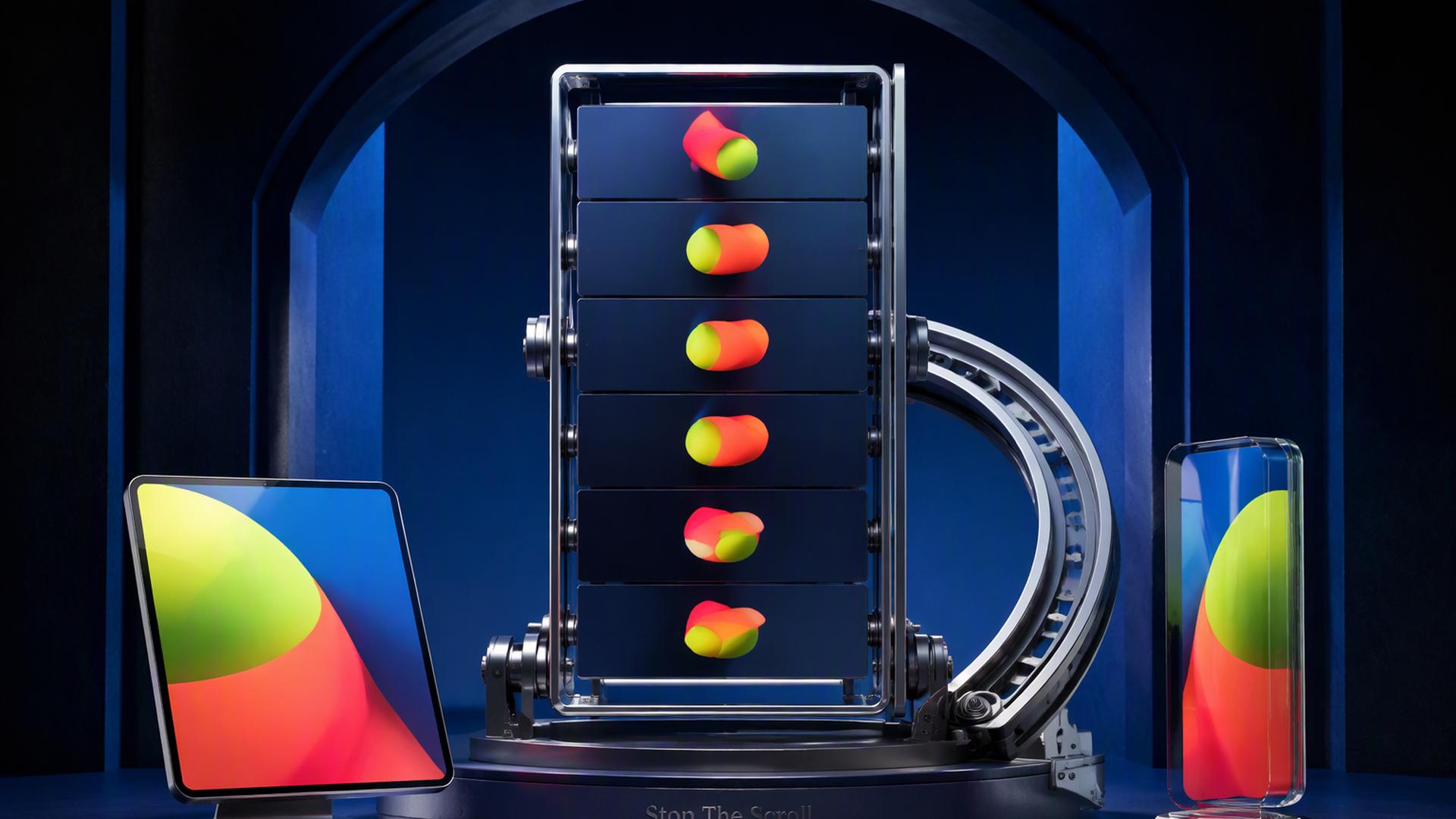
Motion Ads That Stop the Scroll: Finding Examples Worth Studying
Motion changes how an ad behaves in a feed. A still image has to be understood in a glance, while a moving ad can spend its first second earning a second one. Designers and marketers who study the best motion ads learn pacing, framing, and restraint faster than any rulebook can teach them.
What makes motion ads work
Strong motion ads share a few habits. They put the most interesting visual in the first frame, show the product or the problem within seconds, and use movement to guide the eye instead of decorating the screen. Text appears in short bursts that can be read with the sound off, because many people watch with the volume muted.
Pacing matters as much as content. A cut every second or two keeps attention in some categories, and a slow, single shot works in others, such as food, beauty, or craft. The skill is matching rhythm to what the viewer needs to understand.
Studying examples works only if they are chosen with care, which is where tools come in. The free ad spy tools comparison on GetHookd's site lists the options at no cost, including Meta's Ad Library, a seven-day full-feature trial of GetHookd itself and BigSpy, and it notes that GetHookd lets users filter ads by performance status and save research permanently.
Accessibility belongs in the brief
Motion carries a safety obligation that stills do not. The Web Content Accessibility Guidelines treat flashing as a health issue, and Success Criterion 2.3.1 summarizes the goal plainly, which is that content should not trigger seizures. It advises avoiding content that flashes, or keeping it under defined thresholds, and it notes that flashing content can cause migraines, dizziness, nausea and seizures.
The underlying rule is that nothing should flash more than three times in any one second unless the flashes are below the general flash and red flash thresholds. Saturated red flashing is treated more strictly because people are even more sensitive to it.
Designers who work on strobing transitions, rapid cuts between bright frames or flickering lights in ads should count flashes and test with an accessibility checker. A scroll-stopping ad that harms viewers is not a good ad, and platforms and clients increasingly expect creators to think about it. In practice this means building a quick check into the workflow. Export the finished video, scrub through frames around any bright transitions, and run an automated flash analysis tool if the edit includes strobing effects, rapid cuts between light and dark frames or camera flashes. Keep the result with the project files so that a client query can be answered in minutes.
Where to find examples worth studying
Start with the free official sources. Meta's Ad Library lists active ads on Facebook and Instagram and requires no account, and platform libraries on other networks exist as well. A short search by brand or keyword turns up current motion creative within minutes.
Dedicated tools add filters and storage. GetHookd's comparison describes a feature that sorts ads by performance status and keeps saved ads after advertisers turn them off, which matters because motion ads rotate quickly. The same page says that Meta's free library lacks performance data, organization and AI tools, and that BigSpy's free plan limits the number of searches and ads shown.
Pick examples with a reason. Choose ads that have run for weeks rather than days, ads from brands that keep returning to a format, and a few that look different from the rest of the category. A varied set shows what is common and what is distinctive.
How to break down a motion ad
Work shot by shot. Write down what appears in the first frame, what changes at one second, at three seconds, and at the end, and where the text and the call to action appear. A simple table with time stamps turns a thirty-second video into something that can be compared.
Note the audio plan as well. Does the ad make sense with the sound off? Are captions burned in or generated by the platform? Is there a voice, music, or ambient sound, and does it carry information?
Finish with a one-line hypothesis about why the structure might work, for instance, that the ad opens on the problem, shows the fix in use, and closes on a single offer. Treat the line as a guess, because public libraries do not show results. Revisit the guess when you see the same brand repeat the structure in later ads. Patterns that persist are more trustworthy than single successes.
Turning observation into your own work
Use the study to build principles rather than copies. If most strong examples in a category open on a close-up of the product in use, that is a pattern worth testing with original footage. Copying another brand's shots or edit closely is poor craft and carries legal risk.
Make small tests. Produce two versions that differ only in the first two seconds, run them to a similar audience, and compare. Keep notes about what each test taught and file them next to the examples that prompted them.
Build a small library of your own. Save each analyzed ad with its table, the hypothesis, and a tag for the structure, so that a new brief can start from three relevant examples instead of a blank search. After a few months, the collection shows which structures keep appearing, which have faded, and which your own tests have confirmed. Review it with the team every quarter and retire examples that no longer represent the market.